The Encore Shelf: Turning 2026’s Concert Odds and Ends Into a Vanity Worth Showing Off
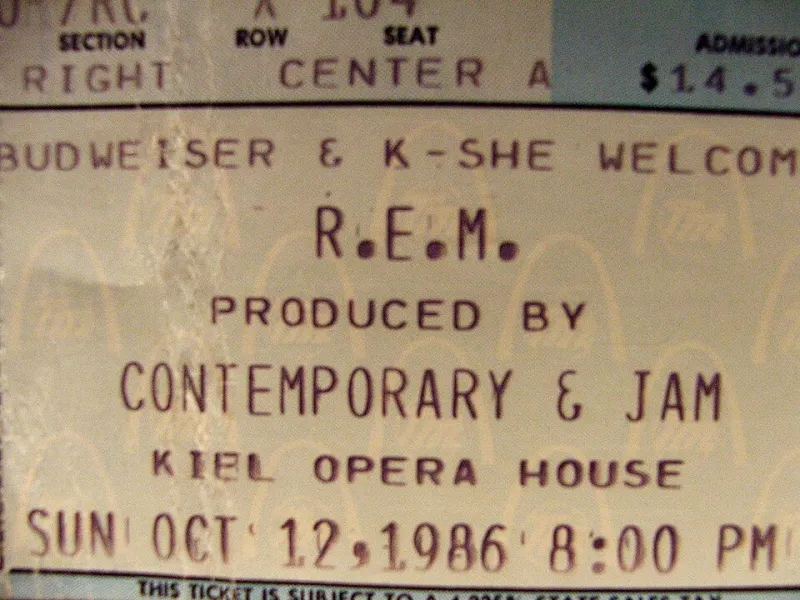
Photo: TicketMaster Uploaded by: Richard Newton from Detroit, Michigan, U.S.A., CC BY 2.0, via Wikimedia Commons
There’s a shoebox in your closet doing hard time. Inside: a stack of ticket stubs gone soft at the corners, two fabric wristbands you refuse to cut off, a guitar pick you caught during the encore, and a fistful of confetti that has been shedding glitter onto every surface it touches since March. You are not alone. Somewhere between the post-show comedown and the next presale countdown, a quiet ritual has taken hold among young fans in 2026: dragging the evidence out of storage and giving it a shelf.
Call it the encore shelf. Part memory board, part beauty station, and — importantly — a lot more photogenic than the pile of receipts currently camped out beside your perfume.
Why the Stub Outlived the Screenshot
The case for this habit is basically a math problem. Your ticket in 2026 lives in an app that updates, expires, and forgets you the moment the barcode scans. Which means the physical stub has become something you have to actively choose: the box-office will-call printout, the fan-club mailer, the last-minute paper ticket from the venue that still hasn’t gone fully digital. The sturdier the object, the stronger the pull.
Same story with the rest of the haul. RFID wristbands replaced paper ones years ago, but the woven band on your wrist at midnight still says something the app can’t. Confetti from an arena show is free, weightless, and weirdly specific — you know exactly which song it fell during. A guitar pick is a two-dollar piece of plastic with an outsized story attached.
Beauty shelves have quietly absorbed all of it. Scroll through any dorm-room vanity tour and you’ll spot a framed stub propped behind a candle, a wristband tied around the neck of a perfume bottle, confetti pressed into resin-free glass jars. It’s not decor in the traditional sense. It’s a record of where you’ve been, sitting next to the products you use to get ready to go somewhere else.
The Three-Zone Rule (For a Shelf the Size of a Laptop)
Most people abandon this project for one reason: the whole thing turns into clutter within a week. A shelf 24 inches wide can hold a display, but only if you decide what job each section is doing. The easy fix is a three-zone split.
Zone one, the anchor. One larger piece — a 12x12 shadow box or a deep frame — holding your best stub, a photo strip, and a single pick. This should eat roughly 40 percent of the shelf and sit slightly off-center. Off-center reads as styled; dead-center reads as a trophy case.
Zone two, the texture layer. This is where the soft, messy, tactile stuff goes: confetti dropped into a squat glass jar, a wristband draped over a small ceramic tray, picks lined up on a narrow magnetic strip mounted vertically on the wall beside the shelf. Keep the whole zone under four inches tall so it doesn’t compete with the anchor.
Zone three, the working layer. The things you actually touch every day — one perfume, one candle, a lipstick you’re currently loyal to, a brush cup. Cap it at four items. Anything you haven’t reached for in a month goes back in the drawer, not on the display.
Leave roughly a third of the shelf empty. Negative space is what separates a vanity from an archaeological dig.
Small-Space Moves That Actually Hold Up
The number one mistake is treating the dresser top as the only available real estate. It isn’t. A slim picture ledge screwed into the wall above the dresser frees the whole surface and puts the keepsakes at eye level, which is where they look best. If you rent and can’t drill, heavy-duty removable strips rated well above the shelf’s loaded weight are non-negotiable — and no, the cheap ones don’t count.
Two archival notes worth the extra five dollars: use UV-filtering glass if the shelf catches direct sun, because ticket ink fades faster than you’d think, and use acid-free backing or photo corners instead of glue. Nothing kills the sentiment faster than a stub permanently welded to cardboard.
What to Buy, and What to Leave on the Rack
Worth it: a 1.5-to-2-inch-deep shadow box (Michael’s and Target both stock them for under $20), a 24-inch picture ledge, a six-ounce apothecary jar for confetti, a small linen-covered pinboard for wristbands and photo-booth strips, a warm-white rechargeable puck light, and one shallow ceramic tray to corral the beauty products.
Skip: resin kits (they yellow, and they’re a commitment), glitter glue of any kind, and the giant multi-opening collage frame that swallows an entire wall and half your deposit. Also skip mounting picks with tape. They fall. They always fall.
The Backstage-Pass Aesthetic, According to a Set Designer
Priya Raman, a Brooklyn-based production designer who has built sets for arena and theater tours, thinks the appeal is about access rather than nostalgia.
“A ticket stub is proof,” she says. “It says you were in the room. The backstage pass is the next level of that — it says you were on the inside of the room. People want the object that carries the story, even if the story was just getting a wristband scanned at a side door.”
She notes that the look works best when it’s imperfect. “Every backstage pass I’ve ever seen is creased and a little grubby. That’s the charm. When people laminate everything and line it up perfectly, it stops feeling like a keepsake and starts feeling like a corporate gift.”
Her advice for the shelf itself is refreshingly low-tech: “Pick three pieces you’d grab in a fire. Display those. The rest can live in a nice box. A shelf isn’t an archive — it’s a highlight reel.”
The Quarterly Swap
Treat the shelf like a playlist, not a monument. Every three months, pull everything down, dust the glass, and rotate in one new object while retiring one to the box. Swap the candle scent with the season, refresh the confetti jar if it’s gone dusty, and check that nothing has slid into a sunbeam.
It takes about ten minutes. And it keeps the whole thing from turning into what it was before — a box you never open, holding a night you never want to forget.